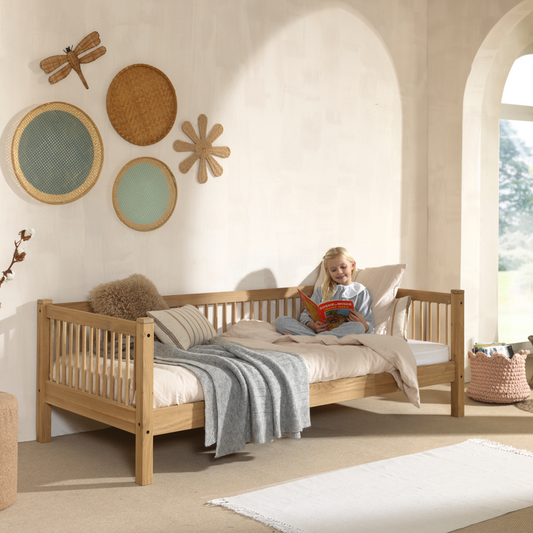
Choosing the right bed starts with how your child will use their bedroom, how much space is available and how their needs may change as they grow. A simple single bed can provide a practical long-term sleeping solution, while bunk beds, mid sleepers, high sleepers and cabin beds can help make better use of limited floor space.
Before choosing, measure the available bedroom space and check the complete assembled dimensions of the bed rather than relying on mattress size alone. Consider doors, wardrobes, radiators and other furniture, as well as the space needed to use ladders, drawers, pull-out desks or underbed storage.
You can explore our full range of single beds, bunk beds, mid sleeper beds, high sleeper beds and cabin beds to compare different designs.
Kids Single Beds
A single bed is one of the most versatile choices for a child's bedroom and can provide a comfortable sleeping space from the move into a first full-size bed through to the teenage years.
Children's single beds are available in many different styles, including traditional wooden frames, metal beds, house beds, day beds and designs with built-in drawers or optional underbed storage.
Mattress size can vary between beds. A standard UK single mattress measures 90 × 190cm, while many of the children's beds within our range require a 90 × 200cm mattress. Always check the mattress dimensions specified on the individual product page before ordering.
If you are moving from a cot bed or smaller toddler bed, a full-size single can also reduce the need to replace the bed again as your child grows.
Space-Saving Beds for Smaller Bedrooms
When floor space is limited, choosing a bed that makes use of the area underneath the sleeping surface can significantly increase the usable space within the bedroom.
A mid sleeper bed raises the mattress above floor level to create room underneath for storage, shelving, play space or a desk while generally remaining lower than a high sleeper.
Cabin beds can incorporate drawers, cupboards, shelves and other storage directly into the bed structure, making them particularly useful where there is limited room for separate bedroom furniture.
A high sleeper bed raises the sleeping area further, creating a larger usable area underneath for desks, wardrobes, seating or storage depending on the design.
Always check the manufacturer's recommended age, overall bed height, ladder arrangement and mattress requirements for the individual model.
Mid Sleeper vs High Sleeper – What's the Difference?
The main difference is the height of the sleeping platform and the amount of space created underneath.
A mid sleeper sits lower and typically provides enough room underneath for storage, play space, drawers or a compact desk. It can be a useful option when you want to make better use of vertical space without choosing a very tall bed.
A high sleeper positions the bed higher, creating considerably more usable space underneath. Depending on the design, this area may contain a full desk, wardrobe, shelving, seating or additional storage.
Which is best depends on your child's age, the bedroom layout, ceiling height and how you want to use the space underneath. Always follow the age and safety guidance provided for the individual bed.
Bunk Beds for Shared Bedrooms
Bunk beds are particularly useful for siblings sharing a room because they provide two sleeping spaces while using approximately the floor area of one bed.
There are several designs to consider. Traditional bunk beds usually provide two single sleeping areas, while triple sleeper bunk beds can provide additional sleeping capacity. Low bunk beds may suit rooms where a lower overall height is preferred, while detachable bunk beds can be separated into individual beds on compatible models.
Before buying a bunk bed, check the overall height, ceiling clearance, ladder position, mattress dimensions and maximum permitted mattress depth.
For more detailed advice, read our UK Bunk Bed Buying Guide.
Kids Beds with Storage and Desks
A multifunctional children's bed can help reduce the amount of separate furniture needed within the room.
Storage beds may include drawers, cupboards, shelving or underbed compartments for clothes, toys, bedding and books. Some beds can also be combined with pull-out trundle drawers that provide either additional storage or an extra sleeping space when compatible with the individual bed.
Our kids beds with desks combine sleeping and study space within one design. These can be especially useful as children grow and need somewhere for homework, reading, crafts or computer use.
When measuring the bedroom, remember to allow enough room for drawers and desks to open fully rather than considering only the footprint of the bed itself.
Choosing the Right Bed Material
The material can influence the appearance, weight, construction and feel of a children's bed.
Our wider kids bed collection includes wooden beds made from materials such as oak, beech and pine, alongside engineered wood and metal designs. Selected ranges are also made using FSC-certified timber.
Solid wood can bring natural character and warmth to a bedroom, while painted wooden beds provide an easy-to-coordinate finish. Metal beds can offer a clean, contemporary or industrial appearance and are available in a variety of colours.
Rather than choosing on material alone, consider the construction, dimensions, features and finish of the individual bed and how well it suits the way your child's bedroom will be used.
Choosing the Right Mattress for a Kids Bed
The mattress must match the exact dimensions required by the bed frame. Two commonly used single mattress sizes across our children's bed range are 90 × 190cm and 90 × 200cm, and they are not interchangeable.
A 90 × 190cm mattress is the standard UK single size. A 90 × 200cm mattress is 10cm longer and is required by many of the children's beds we sell.
Browse our kids mattresses or shop 90 × 190cm single mattresses after checking the requirements of your chosen bed.
Mattress depth is particularly important with bunk beds, mid sleepers and high sleepers because an overly deep mattress can reduce the effective height of the safety rails. Always follow the maximum mattress thickness specified by the bed manufacturer. Our dedicated bunk bed mattress collection includes options selected specifically for this type of bed.